Monthly Postcard Club
Septembre 2026
Teotitlán del Valle, Oaxaca, Mexico
Fall is upon (some) of us!
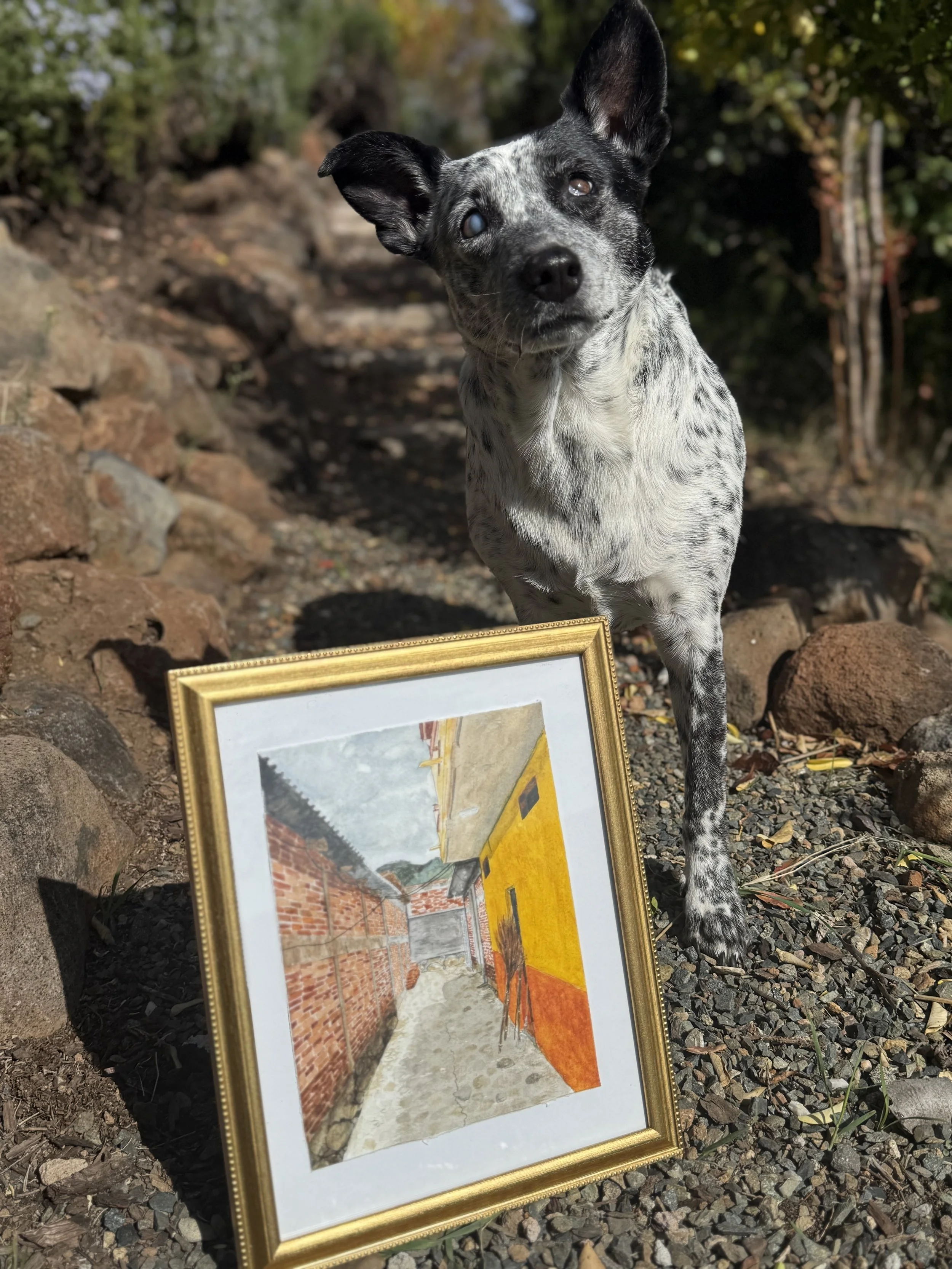
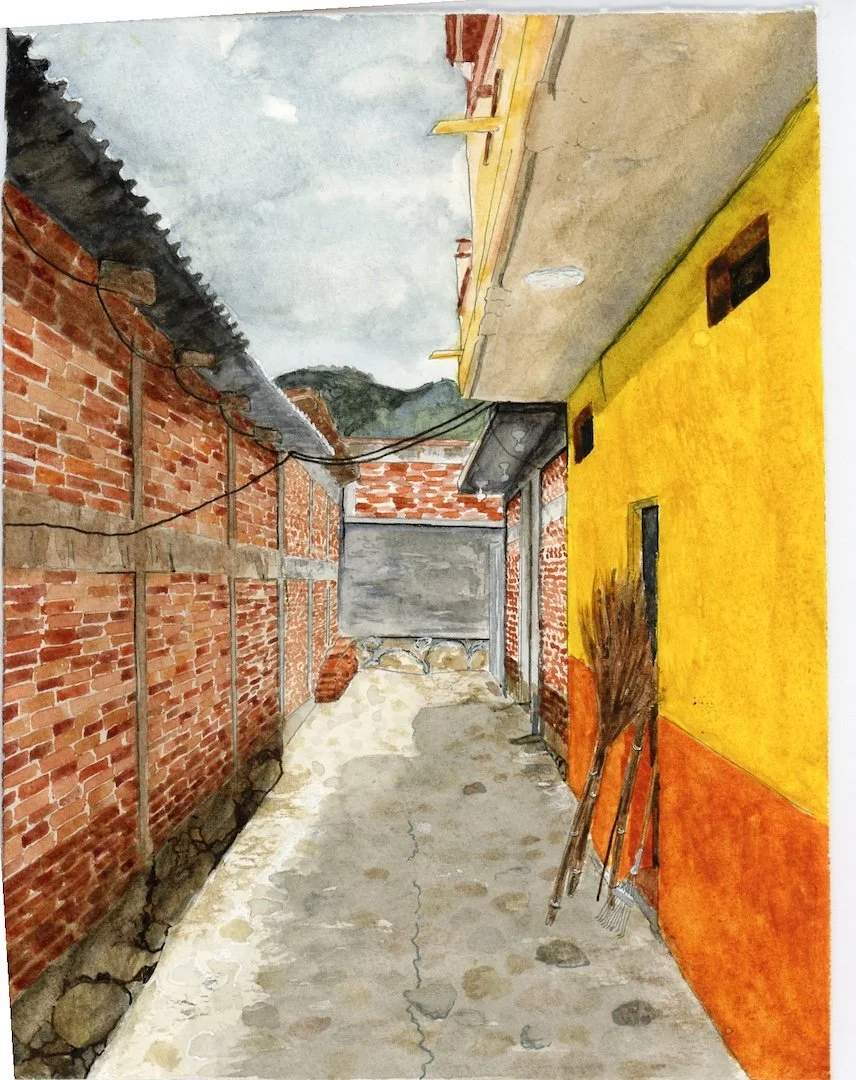
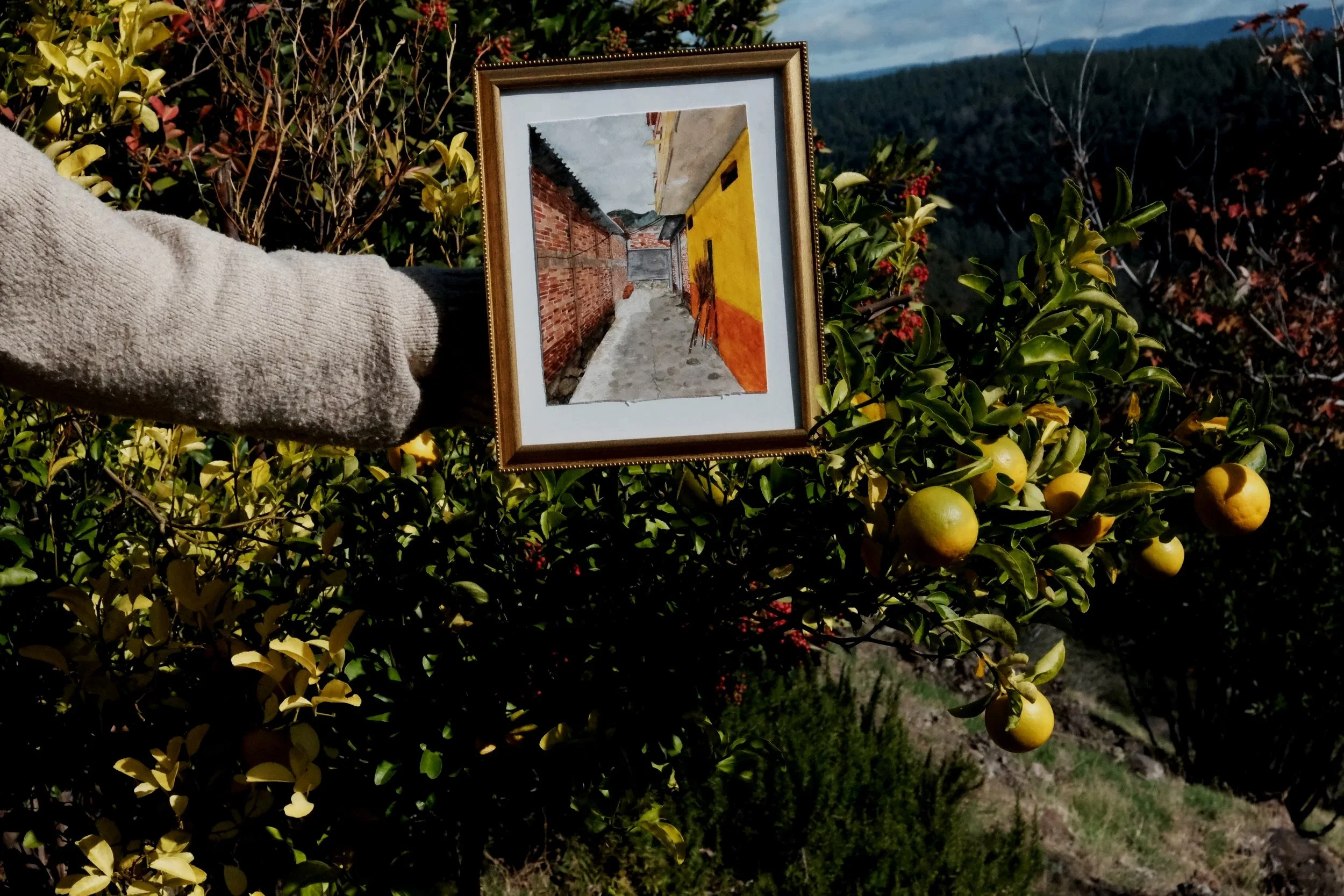
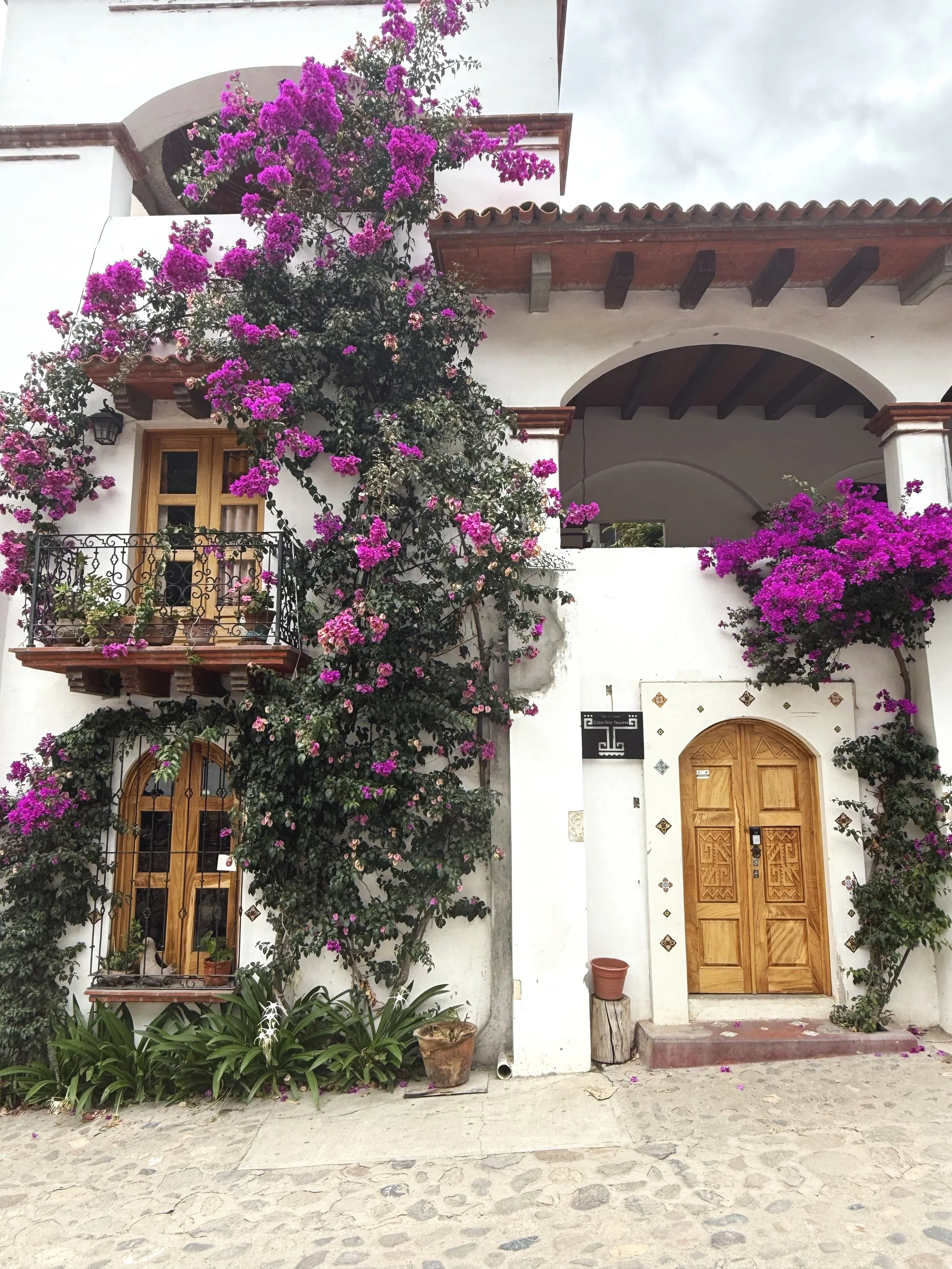
Though this watercolor depicts a scene in Mexico, the colors are all fall, so I have been saving this one. This bold painting kicks off our three-month tour of Oaxaca! This month's postcard brings us to Teotitlán del Valle, a Zapotec village in the valleys outside Oaxaca City, known for its weaving, natural dyes, and living traditions.
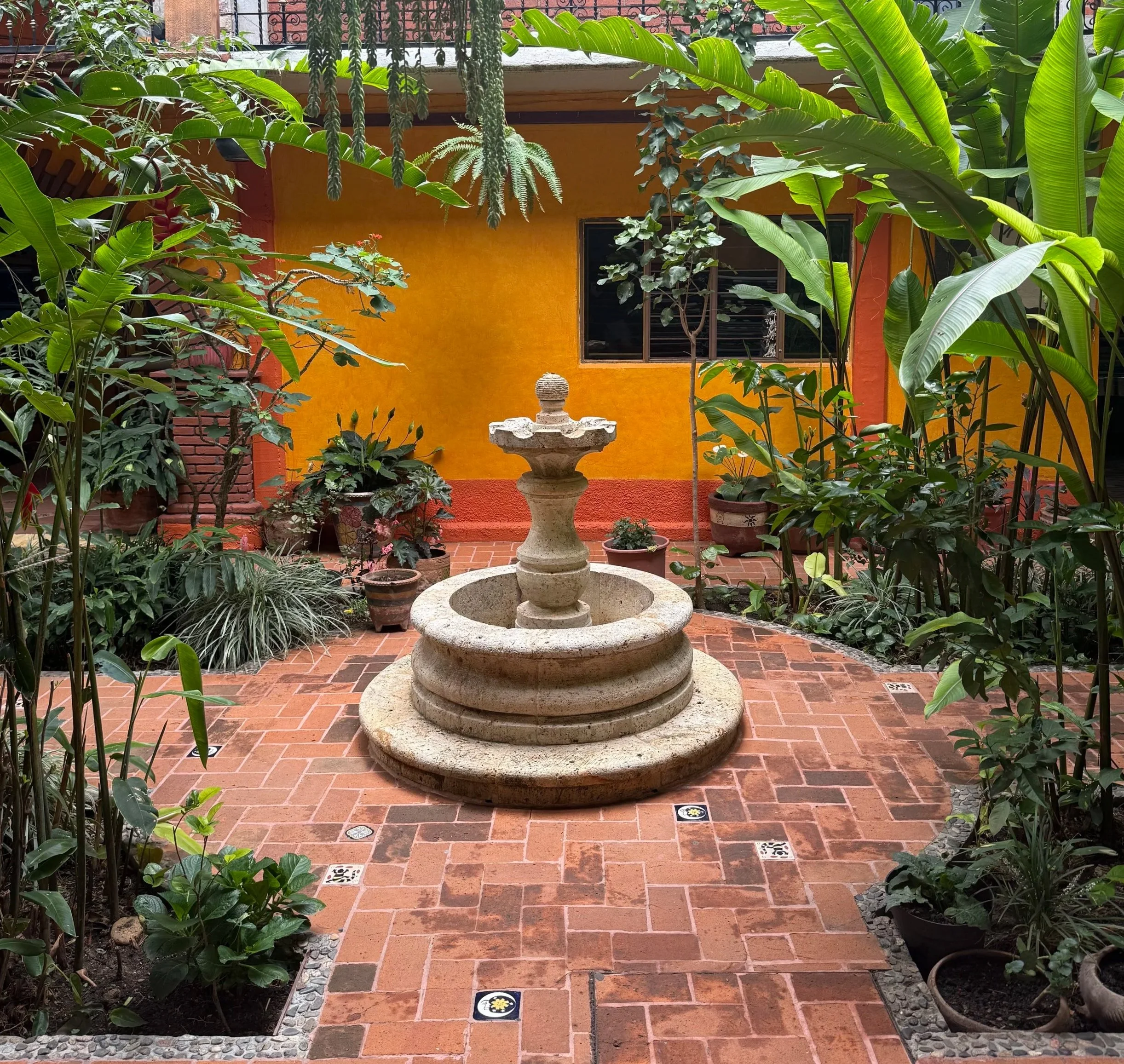
Your watercolor postcard print is of the home of Bulmaro Perez Mendoza Oaxacan Rugs, a family workshop known for hand-woven wool rugs.
A Little History
Makers Keeping Tradition Alive
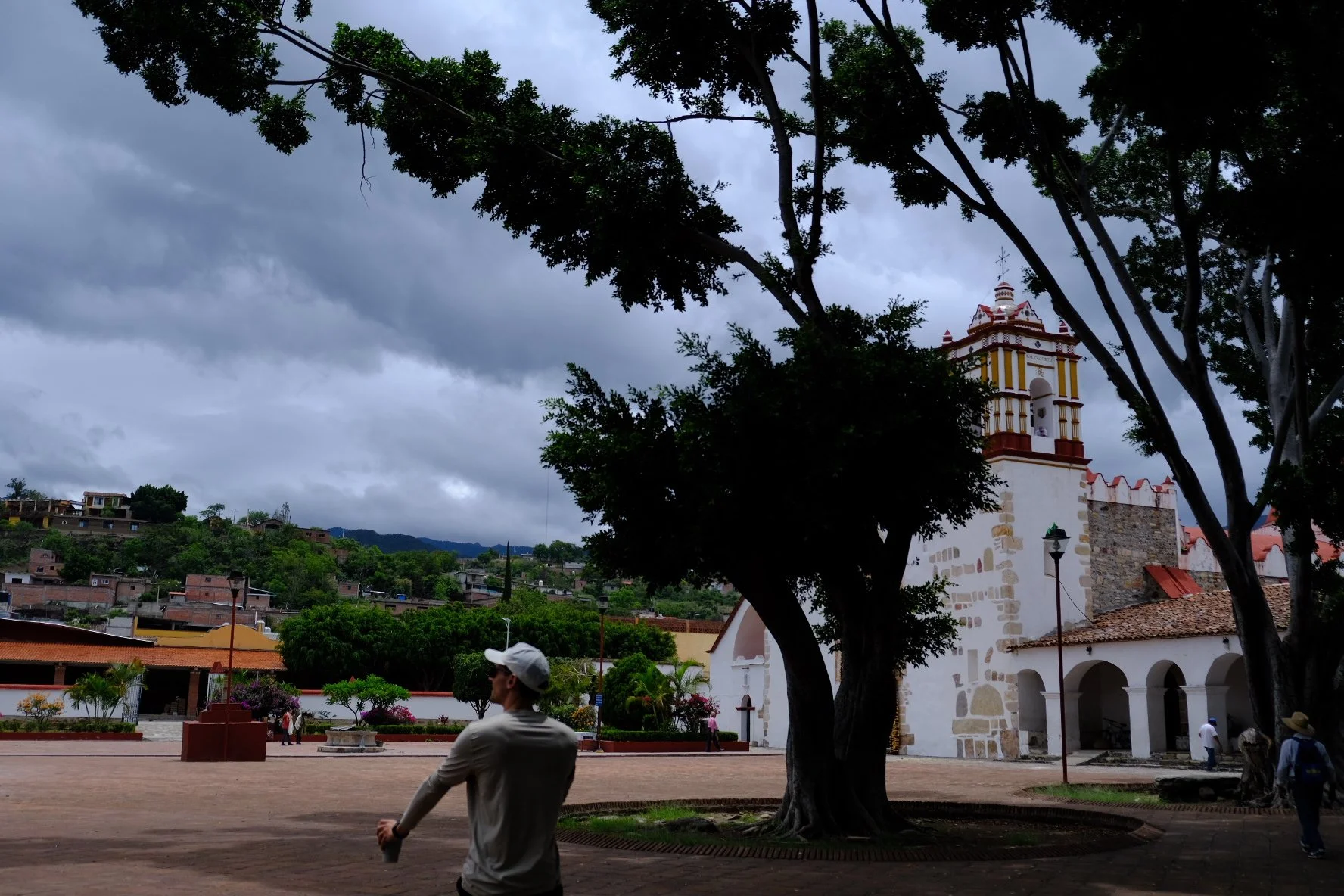
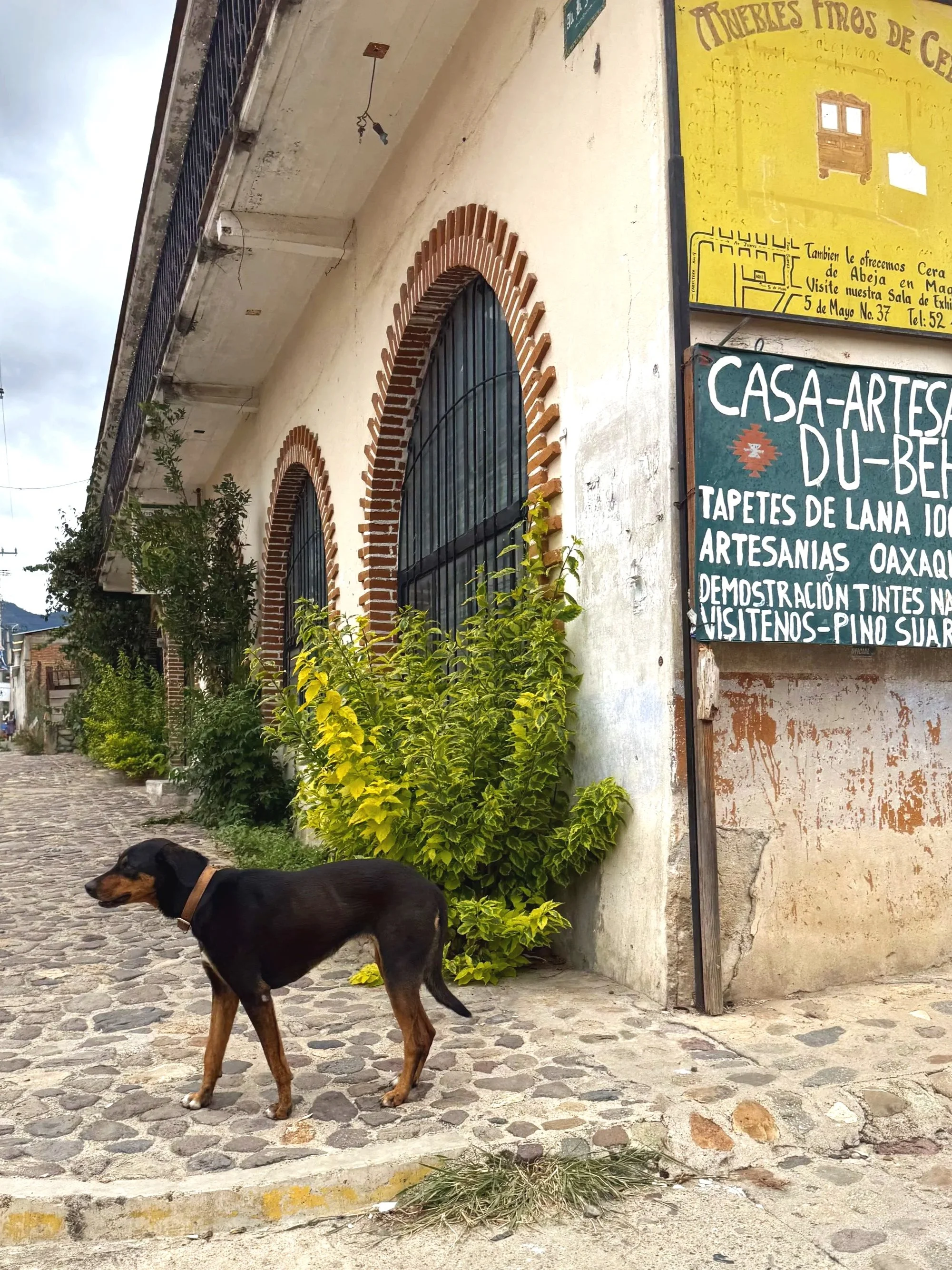
Teotitlán del Valle sits in the Tlacolula Valley, about 18 miles east of Oaxaca City. Its Zapotec name, Xigie, is often translated as "under the stone." Weaving here dates back well over 2,000 years to Zapotec times, and the Spanish pedal loom later joined the ancient techniques. Today the village has around 6,000 residents, and almost every family weaves.
Read more: Monte Alban Heritage Center
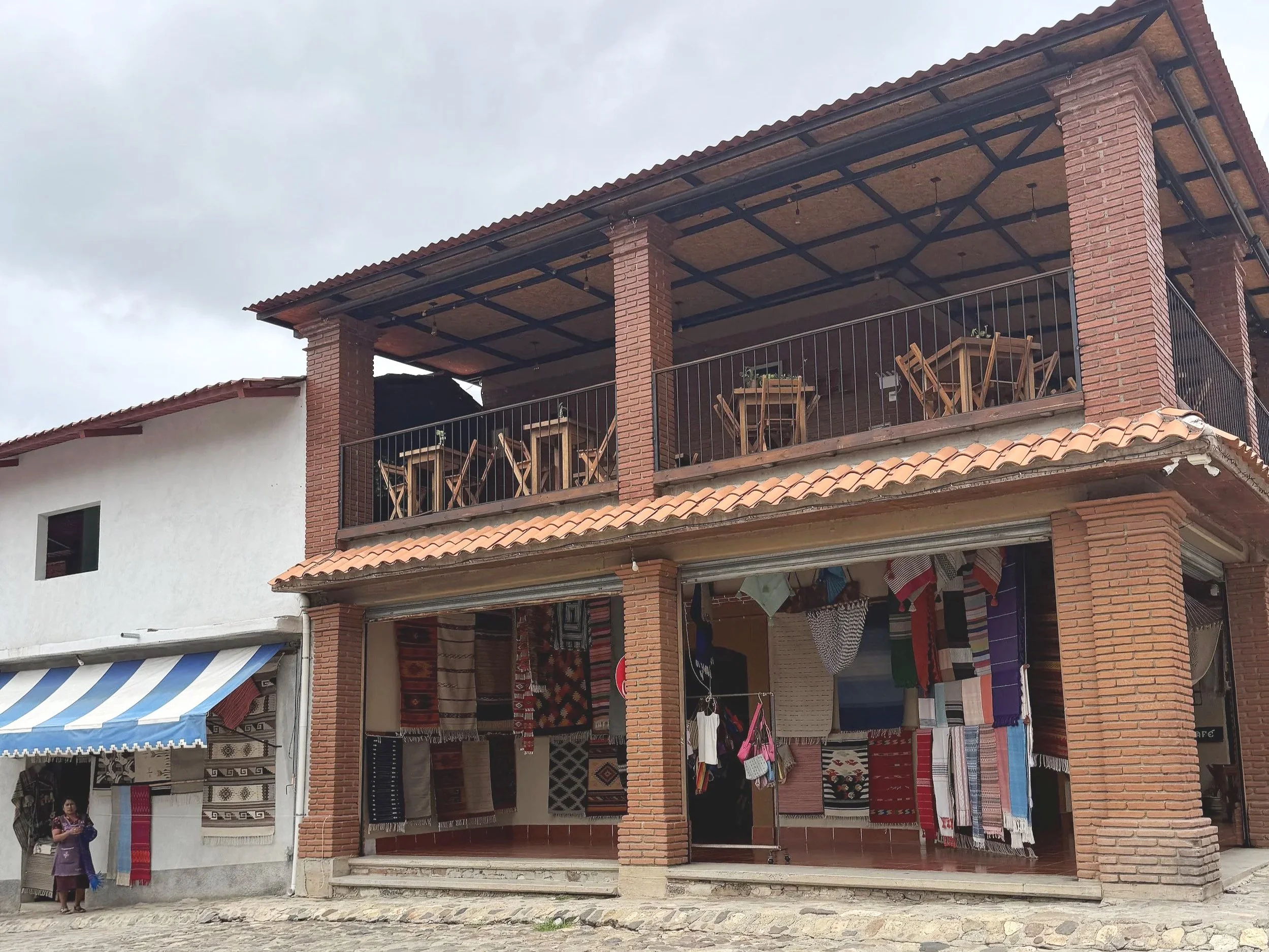
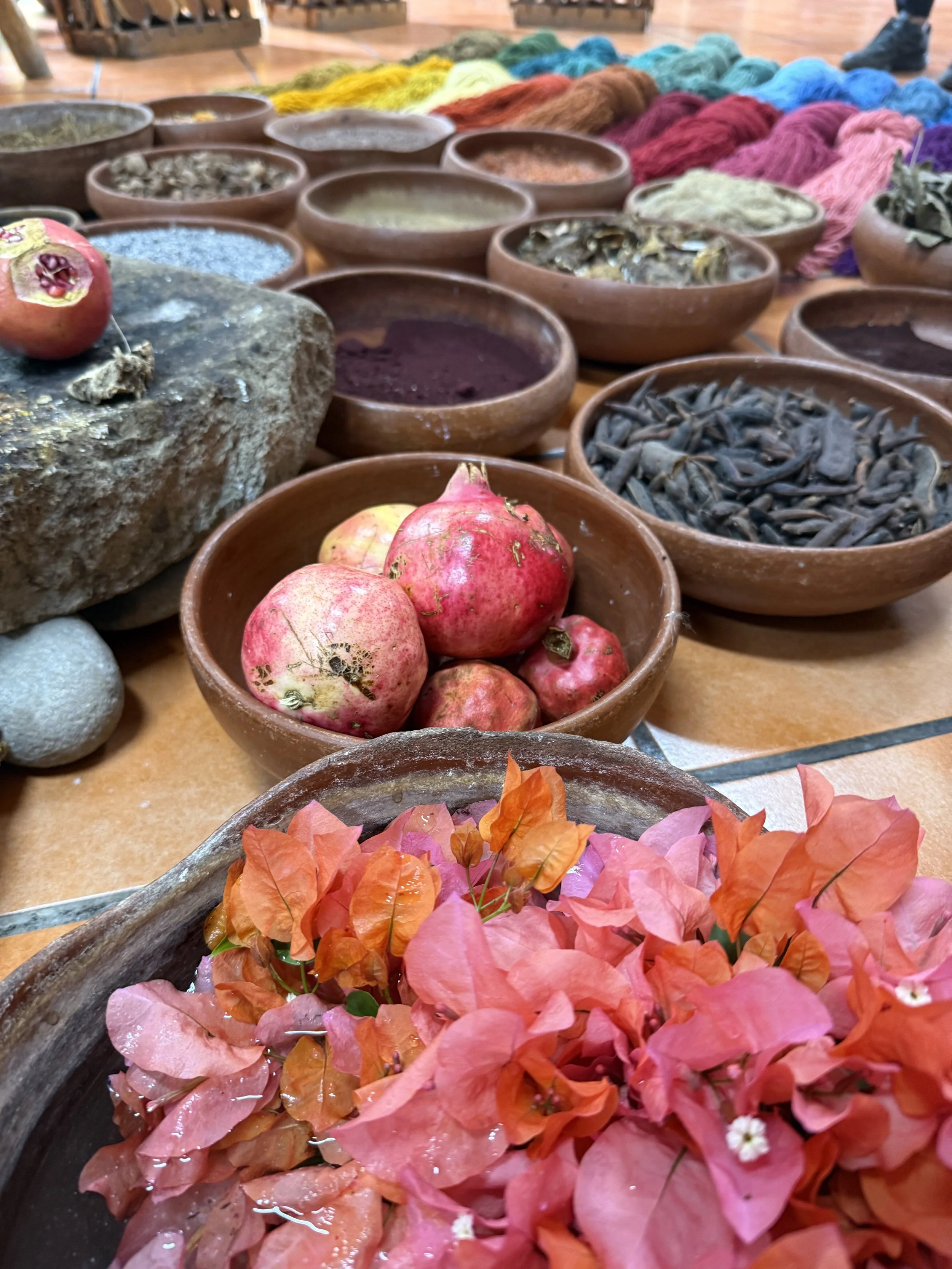
Textiles are the main economic activity, and agriculture is the second. The village became famous for natural dyes: cochineal for reds and pinks, indigo for blues, and marigold for yellows. The culture goes beyond the loom too. Teotitlán is one of the oldest Zapotec settlements in the Central Valleys and is known for the Dance of the Feather. Its food and drink traditions include hot chocolate, atole, and mezcal, and the Zapotec chef Abigail Mendoza Ruiz runs the well-known restaurant Tlamanalli.
The Perez Mendoza Family
Visit & Demonstration
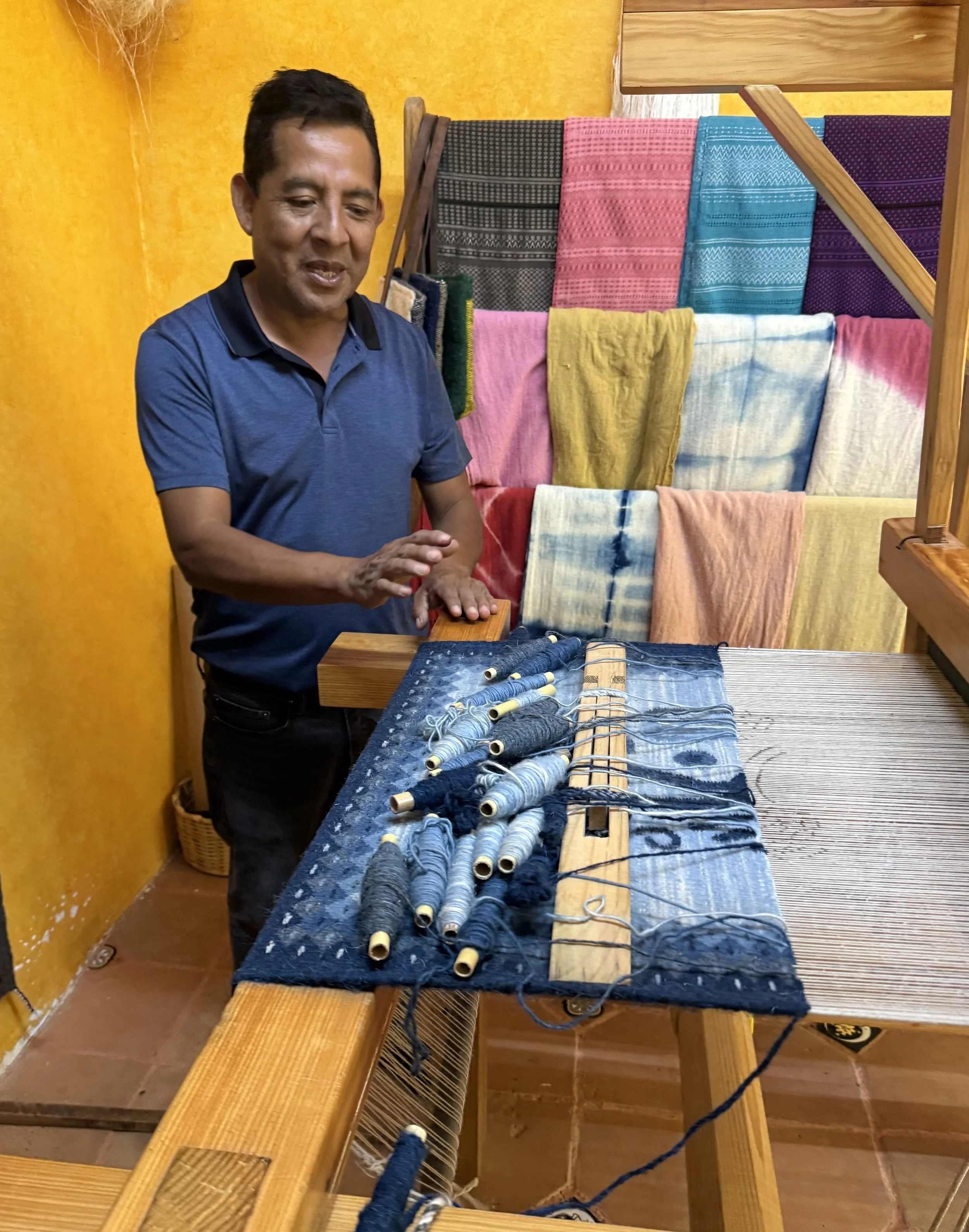
Bulmaro Perez Mendoza is considered one of Teotitlán's premier weavers. He and his family use natural dyes and pure wool, and each rug has a single maker so the weave stays consistent. A rug can take six to nine months to finish. The family makes rugs and wall hangings in many sizes, colors, and designs, along with handwoven bags, shawls, and ponchos.
The Bulmaro's demonstration was the highlight of my Oaxacan experience. He explains dyeing and how to choose wool for weaving. For example, the red comes from the cochineal insect that lives on cactus, and what is mixed with the dried powder changes the shade, from purple to cardinal red. It's easy to see why the golds, oranges, and reds felt so at home in a fall painting.
My Painting Process
Well… I didn’t make my paints. Or my paper. I’m sorry.
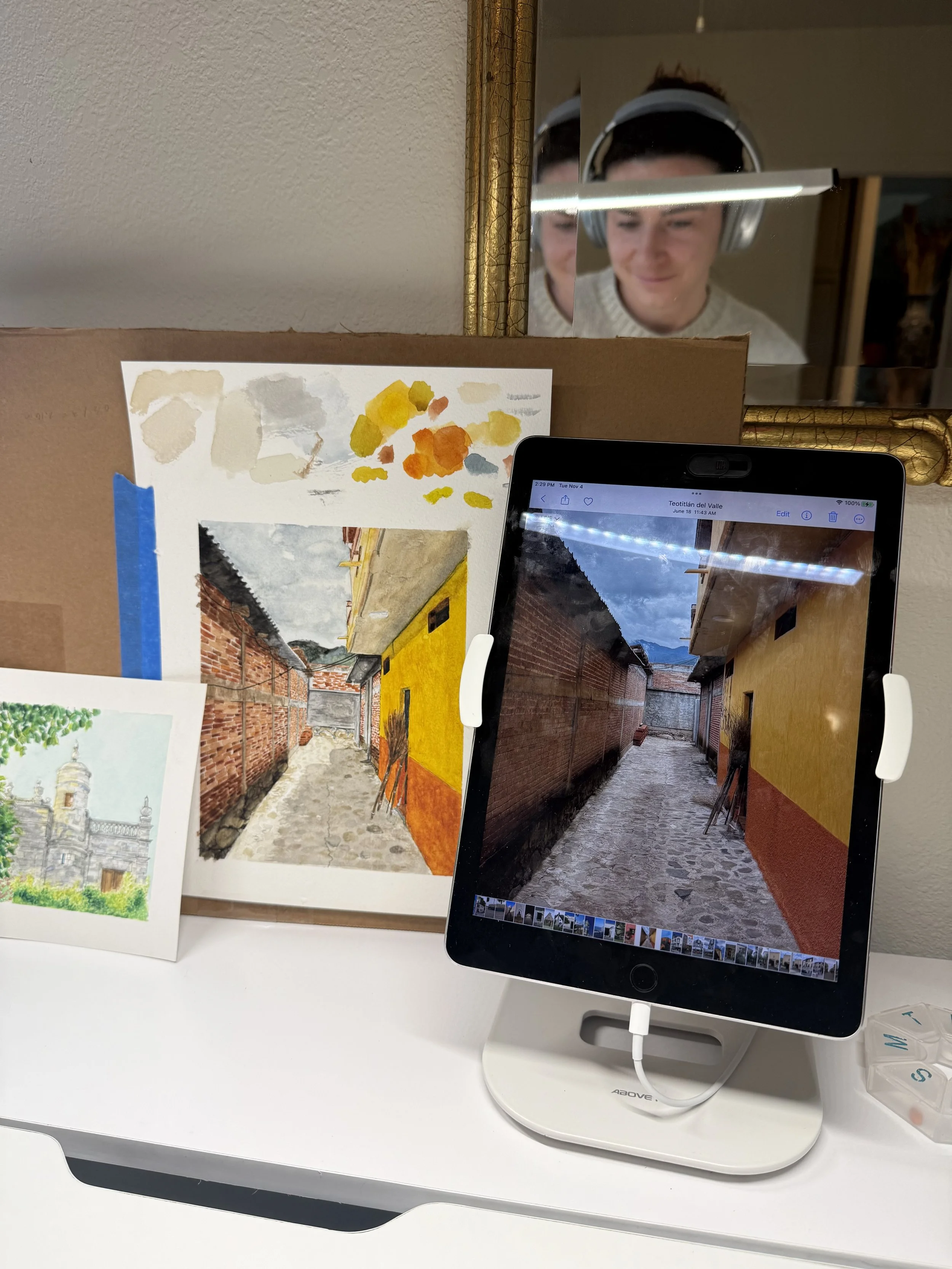
I shockingly… I didn’t take many videos of this painting process. I think it was surprisingly difficult. Similarly to the Burano Italy paintings… this painting needed a lot of color. However it also needed dramatic shadows. This was not new but the yellows and oranges needed a hue that demanded some color theory evaluation.